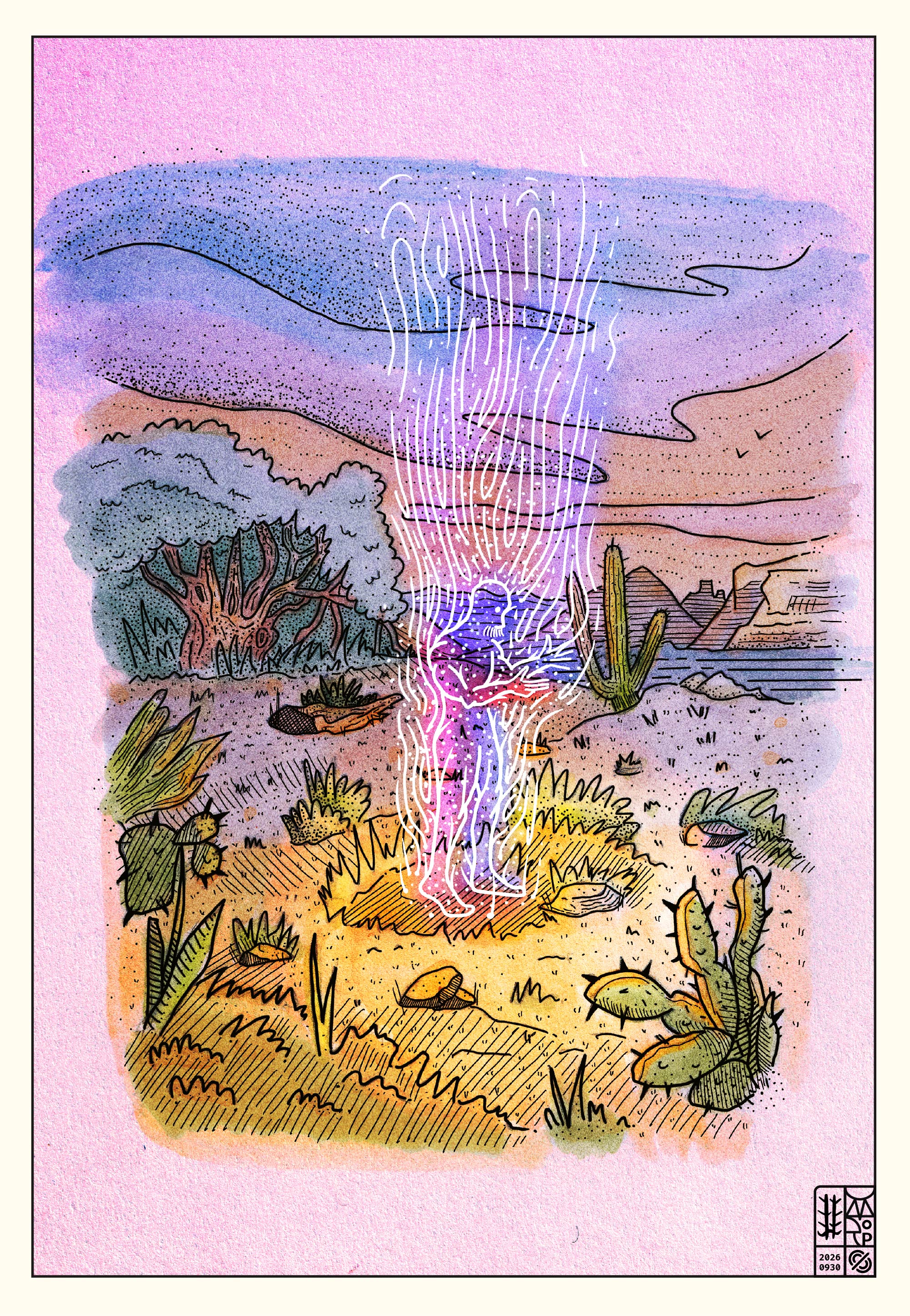
The herald and the poet.
Field Notes of Rahgah - 20260930-S7
Wherever you land, look at your hands before you look at anything else. They show you the shape you hold before you choose another.
My great uncle Yura was my grandmother’s brother, a mathematician and philosopher. I met him rarely and knew him even less. As far as I know he made and kept two wood-burn portraits in his life. My grandmother carried both from Russia around my thirteenth birthday, on the same trip she brought me the family Kalevala.
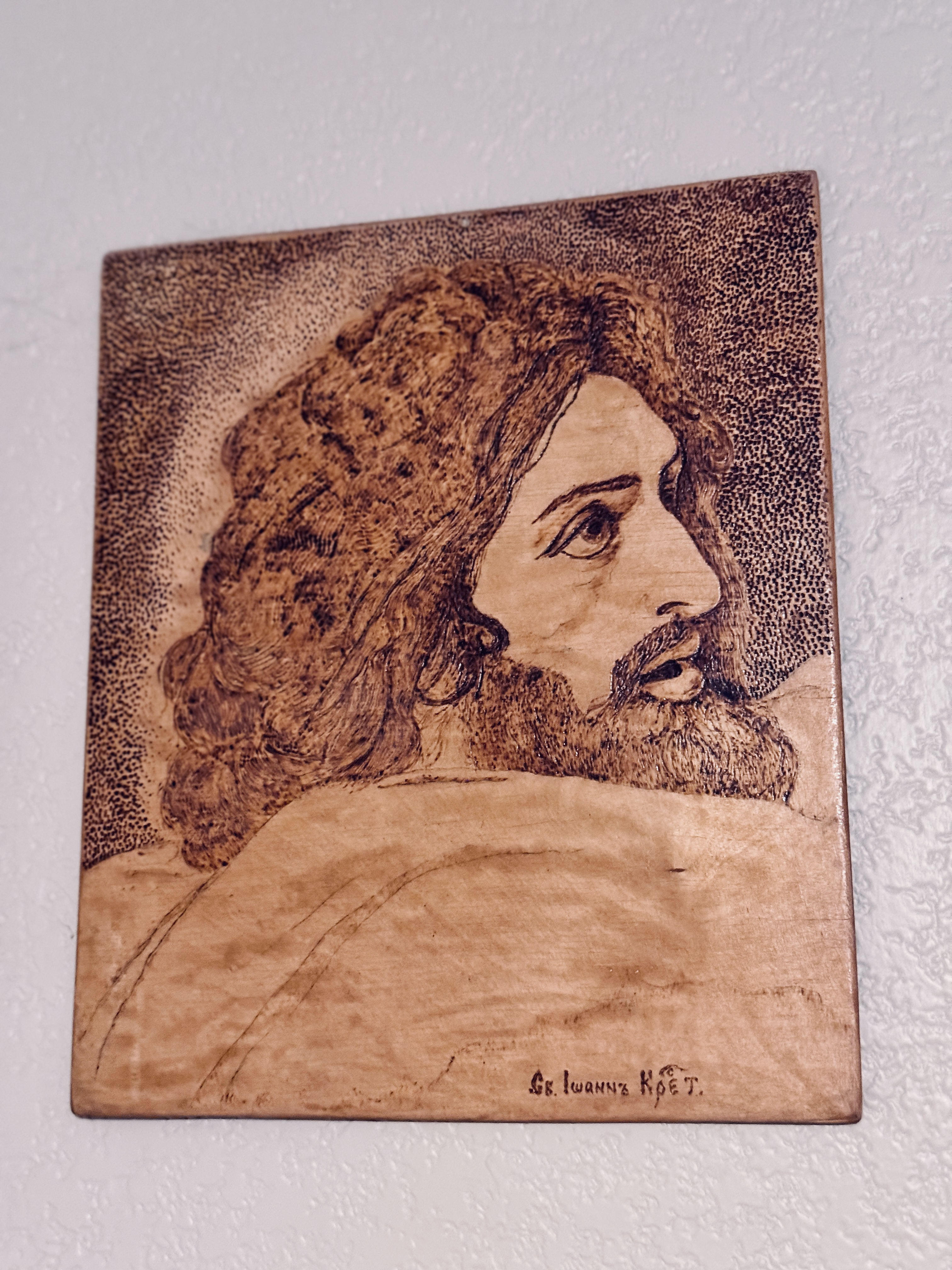
For years I called the first one Christ. A head in profile turned upward, hair falling in ropes. The inscription in the lower right reads Св. Іоаннъ Крест., Saint John the Baptist, abbreviated. The spelling is pre-revolutionary, the hard sign and the dotted і, so whatever he worked from was printed before 1918. The head sits close to Alexander Ivanov’s studies of John for The Appearance of Christ Before the People, and a reproduction of one of them was likely his reference. Ivanov caught John at the moment of pointing.
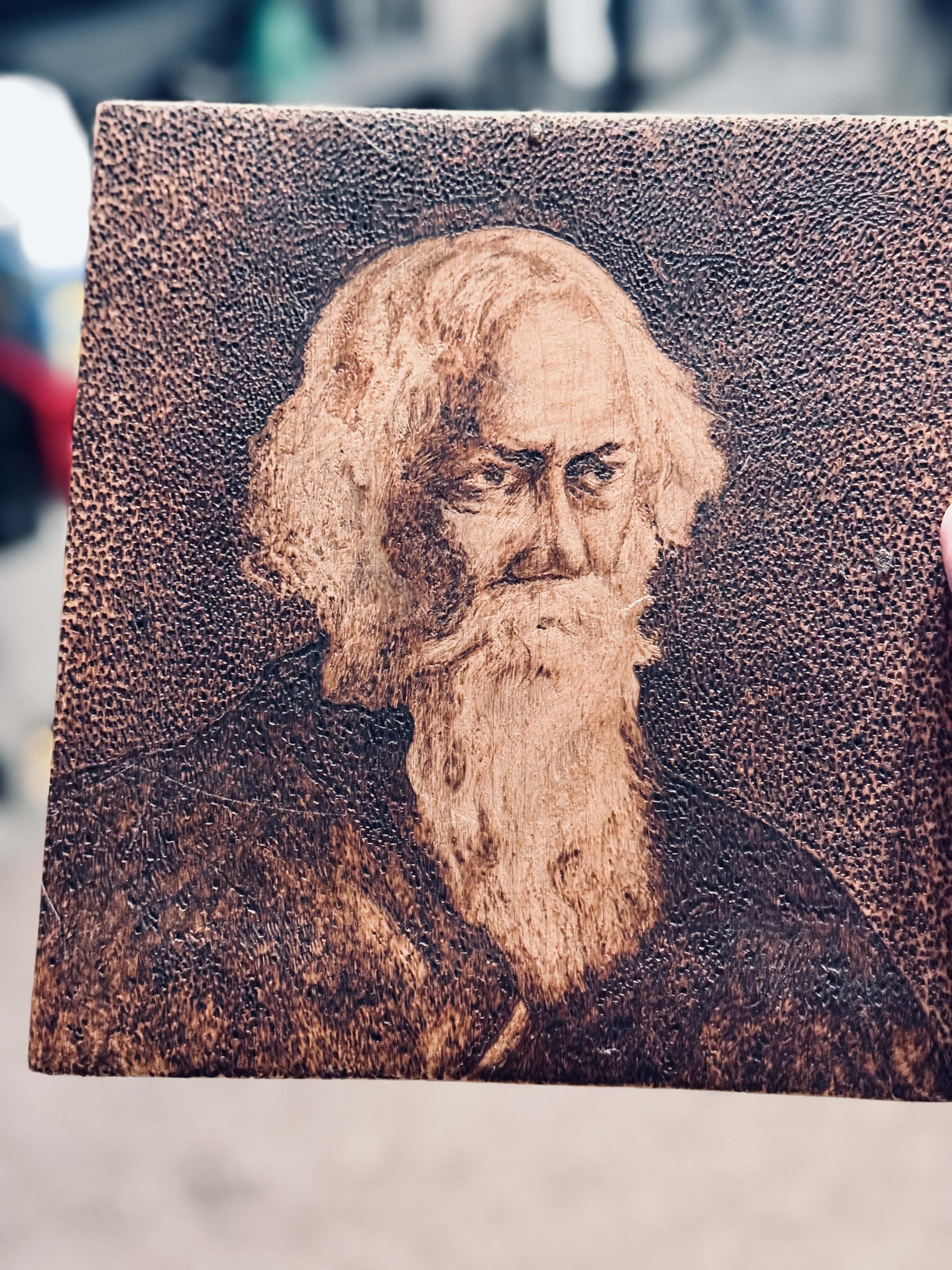
The second board is Rabindranath Tagore. His name is written on the back in Cyrillic cursive: Поэт, Рабиндранат, Тагор. The back is also where Yura tested the tool, scattered burns where he warmed the tip and a single burned eye. Both boards carry his monogram in the corner.
John saw it first. He recognized what was standing in front of him when nobody else could, said so out loud, and stepped aside. He worked by immersion in water. The one thing he said about himself was that he had to become less so the other could become more. The Orthodox call him the Forerunner. A practitioner who reports.
Tagore called himself a poet of the Upanishads. Gitanjali is first-person testimony addressed to the divine. Sadhana explains the whole order in plain prose, from the individual and the whole, through the soul and the problem of the self, to realization in love and realization in action. He refused the role of guru his entire life.
The Kalevala holds the threshold. Two trunks and dark water on the cover, the same form I drew in March without remembering where I had seen it.
The herald, the poet, and the origin-words. One courier, all three delivered decades before there was a practice to run them in.
The mechanism I can stand behind is the ordinary one, and it is enough. I build from reference. Two faces on the wall from age thirteen are templates for an instrument that works from templates. The frame was installed by a man I barely knew, through a grandmother who knew what to carry.
I looked Tagore up once, years ago, and forgot. I moved through apartments, condos, and houses, and lost things I cared about along the way. Never these. The keeping came first and the reason came twenty-six years later.
To work with a thing you gotta know where it came from. These came from Yura. I hope he found peace where